


A guide to the NSW Coroner process. Learn about autopsies, SNOK requirements, police property, and how a funeral director helps manage the release.
When a passing is sudden, unexpected, or the medical cause is unknown, NSW Police are legally required to report the death to the Coroner. For many families, hearing that their loved one is being taken into the care of the Coroners Court (such as the Forensic Medicine facility at Lidcombe in Sydney) can cause immediate anxiety.
At Sydney Memorial Cremations, we want to reassure you that being in the care of the Coroner does not prevent you from making funeral arrangements right away.
While the legal and medical processes can sometimes introduce delays, understanding how the coronial system works in New South Wales can help ease your mind. Here is a clear, compassionate breakdown of what to expect.
1. You Can Contact Us Straight Away
Many families believe they have to wait until the Coroner completes their findings before speaking to a funeral home. This is not the case.
You can contact us the moment you are notified of the coronal involvement. Once you complete a Transfer Authority Form, giving us the legal permission to act on your behalf, our team will take over the logistical burden. We will liaise directly with the Coroners Court, check in regularly for administrative updates, and let you know the exact moment your loved one is ready to be released into our care.
2. How the Coroner Discovers the Cause of Death
The Coroner’s primary objective is to establish the precise identity and medical cause of death. To keep the process as respectful and dignified as possible, specialist forensic teams use a tiered approach, aiming for the least invasive method possible:
-
Step 1: Preliminary Review: The team reviews the person’s existing medical records and the immediate circumstances surrounding the passing. If their treating doctor can safely provide a Medical Certificate of Cause of Death (MCCD) based on known history, the Coroner may accept it and release the body immediately.
-
Step 2: Non-Invasive Testing: If more clarity is needed, they may perform an external examination, blood toxicology tests, or a post-mortem CT scan.
-
Step 3: Autopsy (Post-Mortem): If the cause of death still cannot be concluded through scans and histories, a forensic pathologist will perform an autopsy.
Your Right to Object: As the Senior Next of Kin (SNOK), you will be notified if an autopsy is deemed necessary. You have the right to object in writing (often due to religious or cultural reasons). While the Coroner will carefully consider your wishes, they may still legally proceed if it is the only way to rule out foul play or suspicious circumstances.
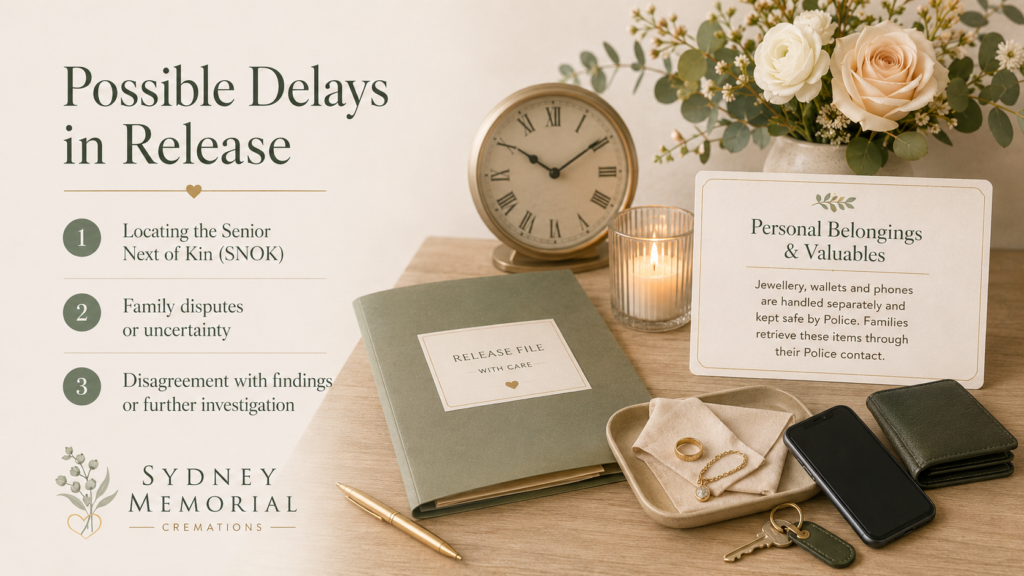
What are some of the delays and what do they do with valuables?
3. What Can Cause Delays in Release?
While basic medical testing and examinations are often completed within a few days (excluding weekends), certain administrative or family situations can hold up the release of your loved one:
-
Locating the Senior Next of Kin (SNOK): The Coroner requires a legally recognized main point of contact. If the person passed away alone and a legal next of kin cannot immediately be found, the process stops until they are located.
-
Family Disputes: If there is conflict or confusion within the family regarding who holds the legal status of Senior Next of Kin, or if the family cannot agree on a nominated funeral director, the Coroner will delay the release until the dispute is legally resolved.
-
Disagreement with Findings: If family members strongly disagree with preliminary medical findings and formally insist on a formal autopsy or further independent forensic investigation, the body will remain in the care of Forensic Medicine for a longer period.
4. Personal Belongings and Valuables
It is important to know that any personal items or valuables physically on your loved one at the place of passing are handled separately from their body.
The Constable in charge of the scene will remove and take custody of all valuables (such as jewelry, wallets, and mobile phones) for safekeeping and tracking. These items are not sent to the funeral home with your loved one. To retrieve them, family members must contact their designated NSW Police contact directly. Please keep in mind that if the items are required as forensic evidence, they may not be released until the full police investigation is finalized.
We Are Here to help Carry the Weight
Navigating a coronal investigation on top of your natural grief can feel incredibly heavy. Please remember that you don’t have to handle the phone calls, the paperwork, or the system alone.
By engaging Sydney Memorial Cremations early, you gain a dedicated advocate. Natasha, Caroline, and our team will stand by your side, managing some of the background communication with the Coroner so you can focus entirely on supporting your family. Contact us at any time if you need guidance or clarity.