
A gentle step-by-step guide for families navigating what to do when someone passes away at home in NSW, with clear next steps and compassionate support from Sydney Memorial Cremations.
Discovering or experiencing a passing at home can feel overwhelming. In those first few moments, it is completely normal to feel shocked, anxious, or uncertain about what step to take next.
At Sydney Memorial Cremations, we want you to know one important thing right away: unless the death is unexpected, there is no immediate rush. You are legally allowed to take some time to sit quietly, breathe, and gather your thoughts before making any phone calls.
When you are ready to take action, the process in New South Wales depends entirely on whether the passing was expected (due to a known illness or palliative care) or unexpected. This guide provides a simple, clear checklist to help you navigate either situation with peace of mind.
Step 1: Assess the Circumstances (Expected vs. Unexpected)
Before calling anyone, consider the health context of your loved one, as this dictates who you must contact first.
Scenario A: If the Death Was Expected
If your loved one was elderly, receiving palliative care, or under close medical supervision for a terminal illness, you do not need to call emergency services for lights-and-sirens interventions.
-
Contact their General Practitioner (GP) or Palliative Care Nurse: Call them as soon as you feel ready. A doctor must formally verify the passing and issue a Medical Certificate of Cause of Death (MCCD) before a funeral director can legally transfer your loved one into their care.
-
After-Hours Timing: If the passing happens in the middle of the night, please know you do not need to panic. It is completely fine to turn off heaters or electric blankets, cool the room as much as possible, and let your loved one safely remain at home for a few hours while you process the moment and wait until morning to contact the doctor.
-
Moving Forward Overnight: Alternatively, if you feel ready to move forward immediately during the night, you can contact your palliative care team or nurse, or call an ambulance. A registered nurse or paramedic can attend the home after hours to issue a Verification of Death (VOD). Once this initial paperwork is completed by the nursing or ambulance team, our transfer team can legally bring your loved one into our care right away. From there, we will take care of sourcing the official MCCD from the treating doctor on the following business day.
Scenario B: If the Death Was Sudden or Unexpected
If the passing was sudden, accidental, or the person did not have a known medical condition, the process is different.
-
Call Emergency Services (000) Immediately: Paramedics and NSW Police will attend the home to assess the situation.
-
The Coronal Process: Because the cause of death cannot immediately be certified by a GP, the police are required to report the passing to the Coroner. A government-appointed transfer team will gently move your loved one to the Department of Forensic Medicine (the morgue) for further review. If this happens, you can still appoint a funeral director immediately, and we will coordinate directly with the Coroner’s office to manage their eventual release.
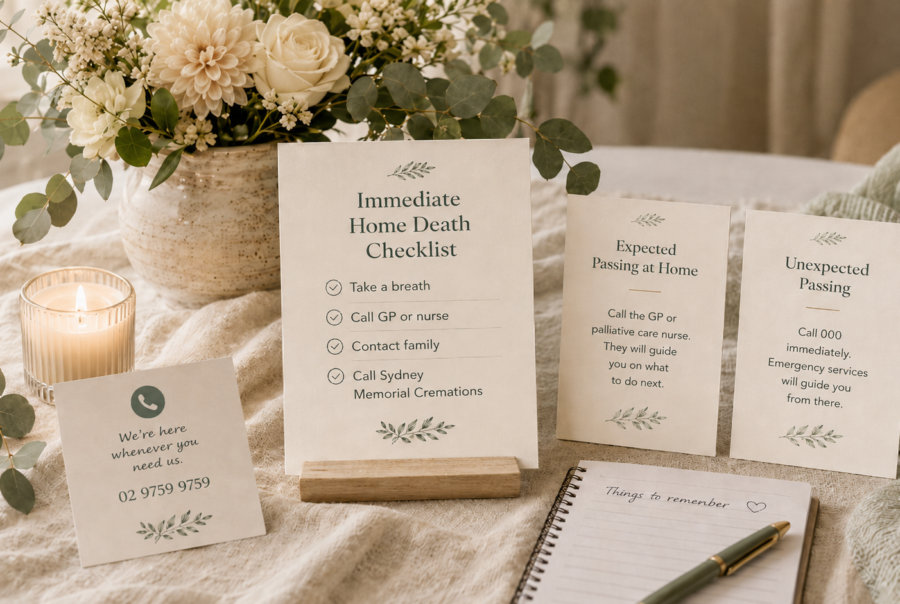
The Immediate Home Death Checklist
When handling an expected passing at home, use this step-by-step checklist to keep things simple:
-
[ ] Take a breath: Allow yourself and present family members a few moments of quiet reflection.
-
[ ] Adjust the room environment: Turn off any electric blankets, heaters, or heavy lighting. If possible, turn on the air conditioning or open a window to keep the room cool.
-
[ ] Call the GP, Palliative Nurse, or Ambulance: Request a visit to confirm the passing and complete the initial paperwork (either a Verification of Death or the full medical certificate).
-
[ ] Call Sydney Memorial Cremations: Contact our team at any hour. Once we know whether a nurse or doctor is attending, we can coordinate the perfect timing to bring your loved one into our care.
-
[ ] Notify close family and support: Reach out to a trusted friend or relative who can come over and sit with you so you don’t have to manage these hours alone.
What Happens After We Arrive?
Once the doctor, palliative care nurse, or ambulance team has completed the initial verification paperwork and you feel ready to say your final goodbyes, our professional transfer team will arrive at your home.
We operate with the utmost discretion and dignity. We will gently transport your loved one into our care, where they will rest safely while we coordinate the remaining official medical certificates. From there, we take care of all the administrative details on your behalf, including registering the passing with the NSW Registry of Births, Deaths & Marriages (BDM).
We Are by Your Side
Whether you need to arrange an immediate transfer, are seeking guidance on what paperwork to expect, or just need to talk through your options for a direct cremation or memorial service, you don’t have to figure it out by yourself.
Natasha, Caroline, and the caring team at Sydney Memorial Cremations are always here to listen, answer your questions, and guide you through each step with transparency and genuine compassion. Reach out to us whenever you need support on 02 9759 9759.