In NSW who is considered the Senior next of Kin
Major decisions regarding final arrangements must happen quickly after a loved one passes away. Amidst the grief, you will frequently hear hospitals, coroners, and your funeral director use one specific legal term: the Senior Next of Kin (SNOK).
What exactly does this role mean? Who holds this authority if a family cannot agree?
In New South Wales, the Senior Next of Kin is a legally defined position. This person holds the ultimate authority to make decisions regarding post-mortem examinations, coronial matters, and final burial or cremation arrangements.
The Legal Hierarchy in NSW
When a person passes away without a Will, a strict “order of priority” applies. The NSW Coroners Act 2009 establishes this exact order. The same rules apply if the named Executor of a Will is unavailable.
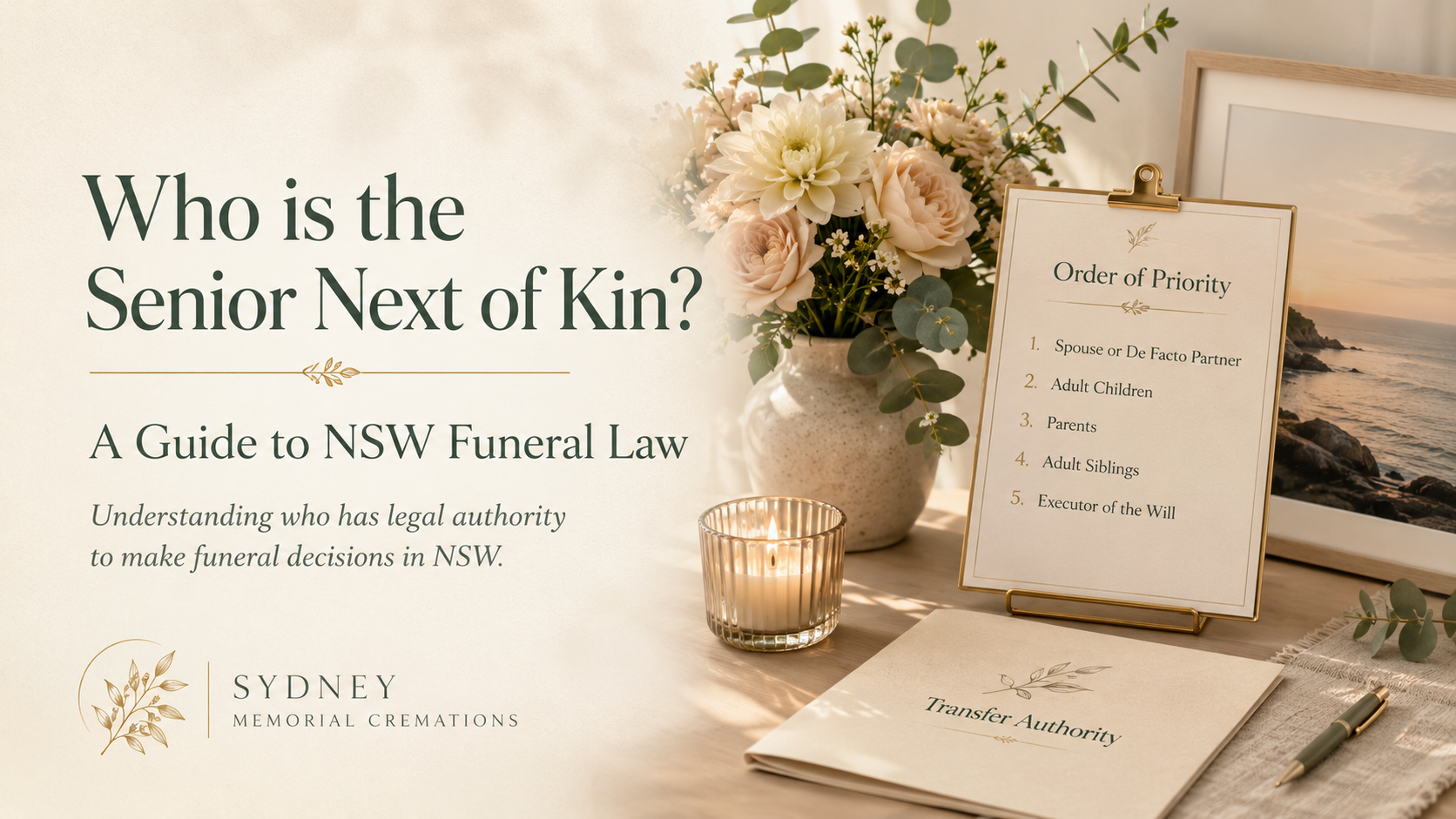
The law moves down this list in sequence. It only progresses to the next level if the person above is unavailable, unable, or unwilling to act:
-
The Spouse or De Facto Partner: This includes a legally married husband or wife. It also includes registered or unregistered de facto partners. If a couple is separated but not legally divorced, the legal spouse usually still holds priority. This changes only if a new de facto relationship is legally proven.
-
Adult Children: If no spouse exists, any child of the deceased who is over the age of 18 can step into the role.
-
Parents: If there is no spouse and no adult children, either of the deceased’s living parents becomes the SNOK.
-
Adult Siblings: If none of the immediate relatives above are alive or available, any brother or sister over the age of 18 takes priority.
-
The Executor of the Will: If the deceased has no living immediate blood relatives or partners, the named Executor steps in to take legal control.
A Note on Aboriginal and Torres Strait Islander Traditions: In NSW coronial law, traditional community customs can expand the definitions of a “parent”, “child”, or “sibling”. This can include step-relationships and foster relationships.

How is a next of kin selected?
What are the Primary Responsibilities of the SNOK?
The Senior Next of Kin acts as the primary point of contact for official institutions. Their key roles include:
-
Signing the Transfer Authority Form: NSW hospitals, forensic facilities, and home care providers require this form before releasing your loved one. A funeral home cannot legally transfer a person without a signed authorization from the SNOK or Executor.
-
Liaising with the Coroner: The SNOK receives all official updates if the passing is referred to the Coroner. They hold the legal right to object to an invasive autopsy. They also receive notice when the Coroner is ready to release the body.
-
Authorizing the Cremation or Burial: They must sign the formal application forms required by the local crematorium or cemetery authority.
Common Complications: What Happens If…
1. The family cannot agree?
Any adult child or sibling can technically act as the SNOK when multiple people share the same rank. However, a major bottleneck occurs if siblings or children disagree on final arrangements or who should sign the forms.
If a dispute arises while a loved one is at the Coroner, the Coroner will delay the release of the body. The family must resolve the issue or secure a court order before the process can move forward.
2. The SNOK doesn’t want the responsibility?
Stepping into this role can feel overwhelming during intense grief. If the rightful Senior Next of Kin does not wish to take on the responsibility, they can formally nominate a delegate. They simply sign a document passing their authority down to another family member or trusted friend.
3. No Next of Kin can be found?
The state steps in if someone passes away in NSW with no living relatives or if family cannot be located. The hospital administration coordinates a basic, dignified public health funeral if the passing occurred in a public hospital. If it occurred out in the community, the NSW Police or local public health units will facilitate the final arrangements.
We Are Here to Guide Your Family
Navigating legal hierarchies while managing your own heartbreak can feel impossibly heavy.
Please reach out to us if you are unsure who in your family holds the legal right to sign paperwork. Natasha, Caroline, and our team deal directly with NSW Health, the Coroners Court, and the Registry of Births, Deaths & Marriages every day. We will help you untangle the paperwork and ensure your loved one receives care with the highest level of dignity and clarity.