
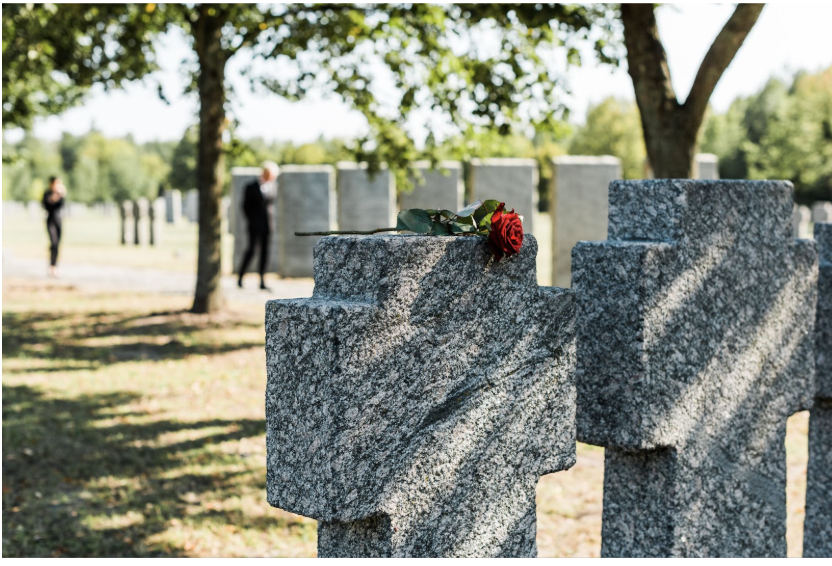
When someone close to you passes, the way you say goodbye becomes intensely personal. It’s not just about honouring their life—it’s also about creating a moment that feels right. For many families, being outside during that farewell feels more grounding than being indoors. The open sky, the fresh air, and even the stillness of the nearby trees—they create a space that feels more connected to the person being remembered.
There’s something about nature that softens even the most challenging moments. It doesn’t try to fix grief, but it holds it differently. Maybe it’s the quiet. Perhaps it’s the feeling of being surrounded by something larger than ourselves. Outdoor memorials often offer that kind of space—gentle, reflective, and without walls.
The power of location in moments of farewell
Where a service is held matters more than most people expect. Families often speak about the comfort they feel when they gather outside. It’s not about the scenery being beautiful or grand. It’s the openness—the way people don’t feel confined or watched. There’s more room for silence, for emotion, for movement. Children can wander. Conversations can flow a little easier—no ceilings, no corners, just a sense of presence.
Natural settings tend to absorb grief without making it heavier. A patch of grass underfoot, a breeze in the trees, even the shifting light across the day—all of it quietly shapes the mood. These details aren’t planned, but they become part of the memory. And in a time when everything else might feel uncertain, that groundedness makes a difference.
It’s also worth noting that for some, being outside is a more inclusive experience. It welcomes people who might feel out of place in traditional spaces. There’s less pressure to behave a certain way, and more space to simply be there, however you need to be.
Traditions evolve, but emotion stays central
What was once expected has changed. Not long ago, most memorials followed a certain pattern—formal venues, religious sequences, predictable structures. These still hold meaning for many, but others are looking for something that reflects the individual rather than the structure. Outdoor services often bridge that gap, allowing for a quiet ceremony without rigid rules.
You may notice elements of faith incorporated into a non-religious gathering. Or hear music that meant something to the person being remembered, played softly as people gather around. These choices don’t diminish tradition—they expand it. They make space for families to honour someone in ways that feel truthful, rather than performative.
For many, a graveside memorial provides an opportunity for quiet reflection in a space that feels both open and deeply personal. It’s less about following a template, more about marking a moment in a way that fits. That kind of freedom doesn’t take away from the seriousness of the occasion—it simply lets love and grief find their own rhythm.
Connection feels different under the open sky
There’s a noticeable shift in the way people interact when they’re outside during a service. Conversations tend to feel more natural. Strangers become less distant. Family members, even those who haven’t spoken in years, find ways to stand beside each other without the pressure of a ceremony forcing it. The space between people feels softer somehow—not just physical, but emotional too.
When grief is fresh, words are often hard to find. However, being outdoors allows for quiet gestures to carry meaning. A shared look. A hand on a shoulder. People don’t always need to speak to feel connected, and something about the open air makes that kind of silent closeness easier. It’s less performative, more lived.
Some families include moments that wouldn’t happen indoors—releasing doves, scattering petals, singing together. Others keep things simple and let the environment speak for itself. There’s no single way to do it, and that’s exactly the point. Under the sky, there’s room for each person to take what they need from the moment, without explanation.
Memories are shaped by setting and simplicity
Long after the service ends, what stays with people often isn’t the words spoken—it’s the setting. They remember how the sun fell across the grass, or the sound of wind moving through nearby trees. The stillness of it all. These aren’t things you can script, but they create a feeling that stays close, long after the day has passed.
It’s often the simplicity that makes it powerful. There’s no need to fill the space with too much. A few chairs. A soft voice. The natural world does the rest. It helps families focus less on the formality of the event and more on its meaning. The connection, the goodbye, the shared presence of people who cared.
That memory becomes tied to a place in a very real way. Some return to that spot in the months or years that follow—not for a reason, just because it feels like the right place to remember. And that’s part of what makes outdoor services different. They create not just a moment, but a physical memory, gently rooted in the world around us.
Planning with care, not perfection
Holding a service outdoors does come with a few practical considerations, but most families find those details manageable. Weather is the obvious one—sun, wind, rain—but many plan with flexibility in mind. Tents, shade structures, or simply choosing a time of day when the light is soft can make a big difference without complicating things.
Sound can be another factor. In quiet settings, even a single voice can carry clearly, but in open areas or near traffic, simple amplification can help. Seating matters too—not everyone can stand for long, and some find comfort in having a place to sit during a difficult moment. But none of these need to be perfect. They just need to be thoughtful.
People rarely remember if a speaker had to pause for the wind or if the seats weren’t all matching. What stays with them is the feeling of the day—the ease, the care, the intention. When planning reflects what the person intended for those gathered, the small imperfections simply blend into the memory.
A quiet farewell that stays with you
There’s something lasting about an outdoor farewell. It doesn’t push for formality or force a certain kind of grief. It simply allows space—emotional, physical, and personal—for people to say goodbye in their own way. The air, the light, the open sky—all of it holds the moment gently, without trying to define it.
As time moves on, people carry that memory with them. Not as a fixed event, but as a feeling that returns when the seasons shift, or the wind picks up, or a certain tree catches the afternoon light just right. That’s what a meaningful farewell does. It stays, quietly, where it matters most.