
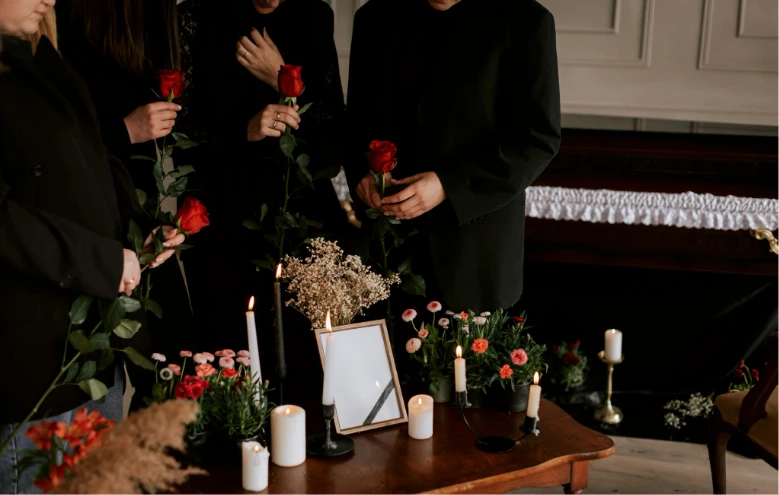
When a family decides to hold a full service before cremation, they’re choosing something meaningful: a shared moment of farewell that brings people together before the cremation takes place. It’s a decision that honours the person who has died with ceremony, gathering, and the kind of collective acknowledgement that many families find essential to their grief.
What comes with that decision is a series of practical arrangements that need to happen in a relatively short period of time, often while the family is in the early stages of grief and not fully equipped to manage logistics. Understanding what needs to be organised, what order those decisions need to happen in, and what the funeral director can take off your hands can make the whole process feel far more manageable.
The Venue and Timing Decisions That Come First
The first decision is usually where the service will be held, and the options for a full cremation service are broader than many families realise. A chapel at a crematorium is the most common choice and offers a purpose-built ceremony space with an established relationship between the facility and the funeral director. A church or place of religious worship suits families where faith is central to how they want the farewell to be conducted. Hired function venues, community halls, and outdoor spaces are chosen by families who want something more personal and less formal, and these work well when the gathering is planned for a location that meant something to the person who died.
Whatever venue is chosen, the timing of the service is determined partly by the venue’s availability and partly by the practical requirements of the days that follow a death. The cremation takes place after the service, which means the service date needs to be confirmed with the crematorium as well as the venue. Most services are held between three and seven days after the death, which gives enough time for family members to travel and for the necessary preparations to be made without the period of waiting becoming its own source of stress.
The funeral director coordinates the logistics between the venue, the crematorium, and the other service elements, which means the family’s primary task at this stage is making the key decision about where the service will be held and communicating any specific requirements that will shape how the venue is used.
The Ceremony Itself: What Needs to Be Planned
The service is where the farewell takes shape, and the decisions involved in planning it are the ones that most directly determine whether the ceremony feels genuinely representative of the person who has died.
The celebrant or minister is the person who conducts the service, and the choice between a civil celebrant and a religious minister reflects the family’s relationship to faith and the wishes of the person who has died. A civil celebrant conducts a ceremony built around the person’s life, personality, and relationships, drawing on whatever the family shares about who they were. A religious minister conducts a ceremony within a faith framework that provides its own structure and meaning. Both can produce a deeply personal and moving service, and the choice is determined by what feels most true to the person being remembered.
Music is one of the elements that most directly affects the emotional experience of a service, and most families underestimate how much thought the music selection deserves. A piece that was meaningful to the person, a song that captures something about their character, or music that was simply loved by the family creates a different quality of moment in a service than a generic selection chosen because it seemed appropriate. Most crematorium chapels can play music from a device or a streaming service, and some have a piano or organ available. Confirming what’s available at the chosen venue early in the planning process avoids last-minute limitations.
The order of service is typically a printed document given to guests as they arrive, containing the sequence of the ceremony, the words to any hymns or readings, and details about the person being remembered. It’s also a keepsake that people take home, and taking care with what it contains and how it’s presented is a way of honouring the occasion. The funeral director can assist with production, or the family can prepare it themselves if they prefer.
Eulogies and readings are the moments where the service becomes specific to this person rather than a general ceremony of farewell, and they tend to be what people remember most clearly afterwards. Most services include a eulogy delivered by a family member or close friend, and sometimes more than one. The celebrant typically meets with the family to gather biographical information and personal memories, which form the basis of the tribute they deliver alongside or in addition to the family’s own words.
The Practical Arrangements Running Alongside the Ceremony
While the ceremony is being planned, a parallel set of practical arrangements needs to happen, and most of these are managed by the funeral director rather than the family.
Death registration is a legal requirement that must be completed before the cremation can take place. In NSW, this involves submitting the relevant documentation to the Registry of Births, Deaths and Marriages, and the funeral director manages this process on the family’s behalf. The registered death certificate that results is the document families need for the legal and administrative matters that follow, including estate matters, closing accounts, and managing insurance.
The coffin is selected as part of the service arrangement. A full cremation service with ceremony typically uses a polished veneer coffin that presents with dignity at the service, and the funeral director’s range covers a selection at different price points. The coffin choice is part of the arrangement conversation rather than a separate process the family needs to manage independently.
For families arranging a full cremation service in Sydney, the funeral director manages the coordination between all the service elements on the family’s behalf, from the venue booking and crematorium scheduling through to the documentation and the logistics of the day itself. What the family provides is their decisions about the ceremony, their input into the tribute, and their presence at the service. The administrative and logistical weight sits with the provider rather than with the people who are grieving.
Notifying people of the service is the family’s responsibility, and in an era where digital communication is available it’s both easier and more far-reaching than it was previously. An email to the extended family and close friends, a social media post where the family is comfortable with that, and personal phone calls to those who need to hear the news directly all help ensure that the people who should be there know about the service in time to attend.
Why the Support of an Experienced Provider Makes the Difference
The families who describe planning a full cremation service as something they were glad they did, rather than something they’re relieved to have finished, are almost always those who worked with a funeral provider who guided them through each decision rather than leaving them to figure out what needed to happen.
A funeral director who has arranged hundreds of full cremation services knows what families need to decide and when, what questions to ask that bring out the personal details that make a service genuinely meaningful, and what the family doesn’t need to worry about because the provider is managing it. That guidance doesn’t remove the grief, but it does remove the uncertainty and the logistical pressure that sit alongside it when a family is navigating the planning process without enough information about what it involves.
The days following a death are not the time to be learning how a cremation service is organised. They’re the time to be with family, to process what has happened, and to begin the work of remembering someone who has died. A funeral provider whose experience means the planning can happen efficiently and with genuine support makes that possible in a way that an underprepared or impersonal approach doesn’t.